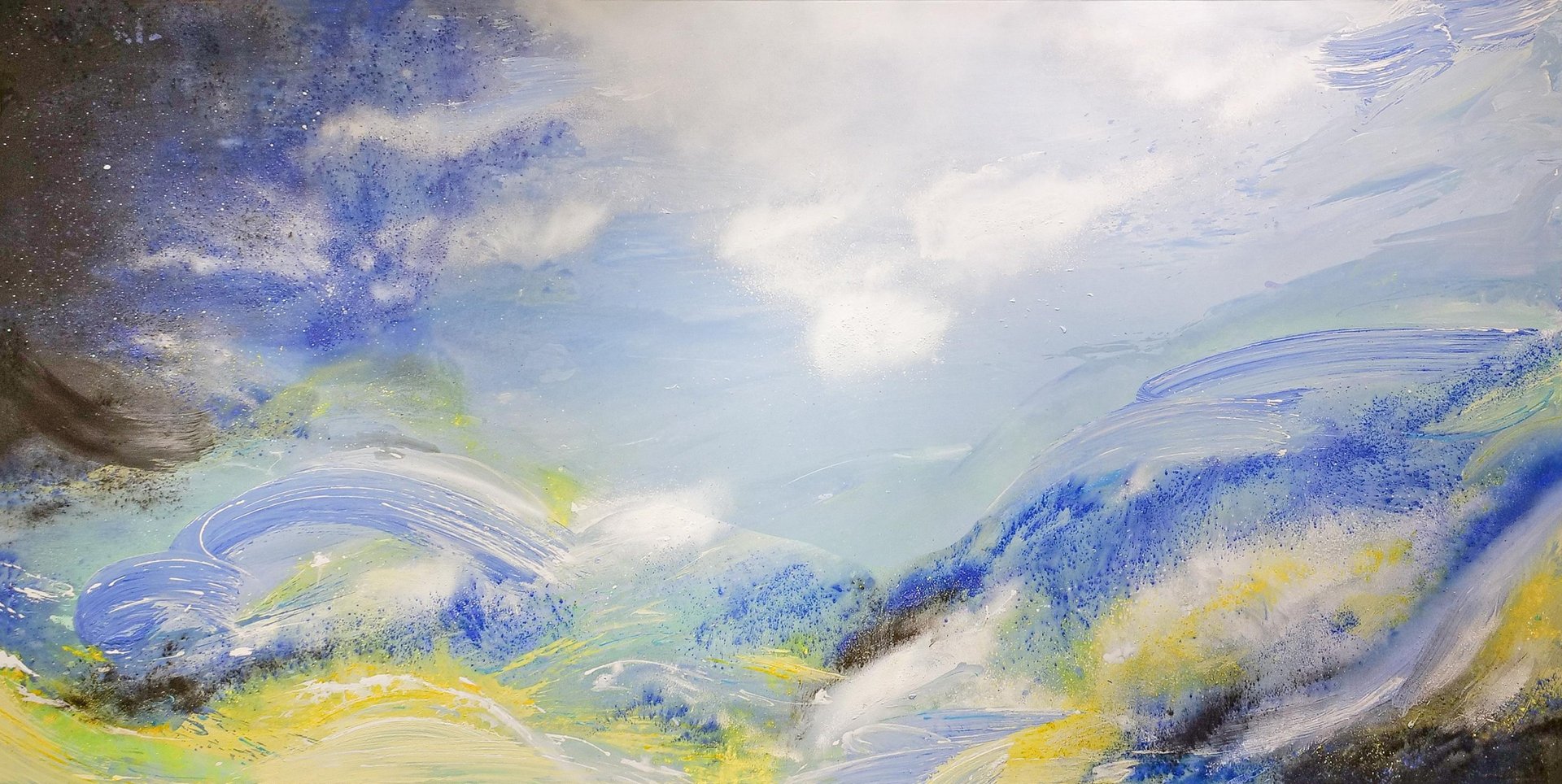
GEMMA ALPUENTE
Algemesí, València
Murcia, Spain
Gary Hill
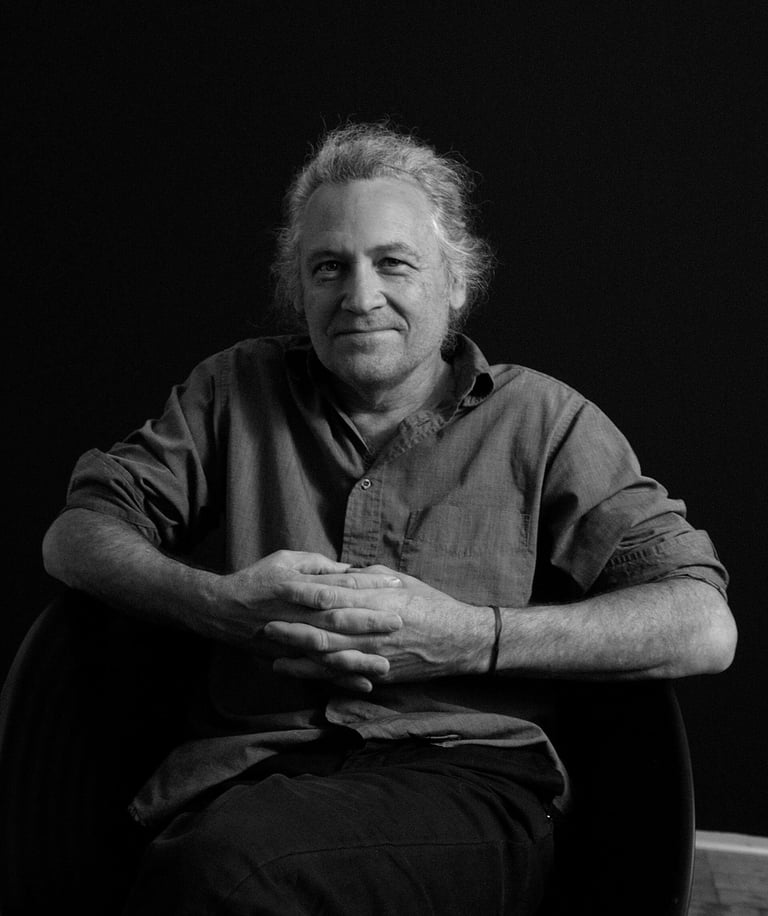
Lavio tiene el honor de anunciar su apertura en Murcia con la exposición inaugural de Gary Hill, una de las figuras más destacadas del arte electrónico y el video experimental. La muestra podrá visitarse durante todo un mes y contará con la presencia del artista en la inauguración, que se celebrará el 18 de abril de 2026.
La exposición, curada por Mario Gutiérrez Cru, presenta una selección de obras nuevas y antiguas de Hill. Su práctica interdisciplinaria abarca video, sonido, performance y escultura, consolidándolo como una de las voces más innovadoras de los nuevos medios.
Fecha: Opening 18 de abril 2026 / Vinos cortesía de bodegas familia Juan Gil
Hora: 19:00 h
Lugar: Lavio, Murcia. Calle Puxmarina, 1
Lavio art gallery
17 / 4
20 / 5
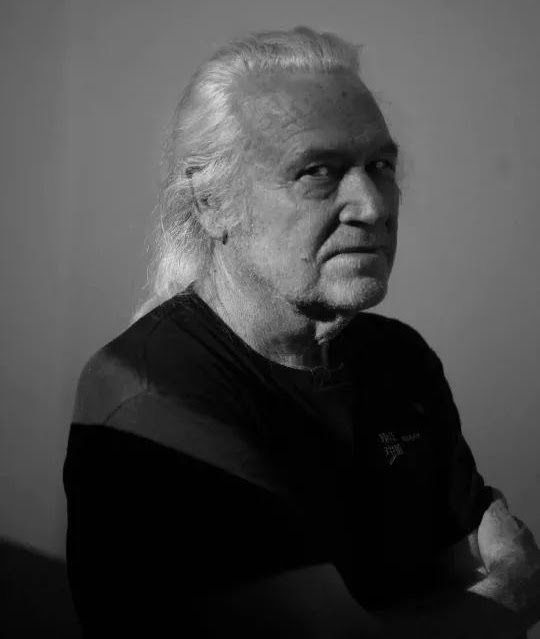
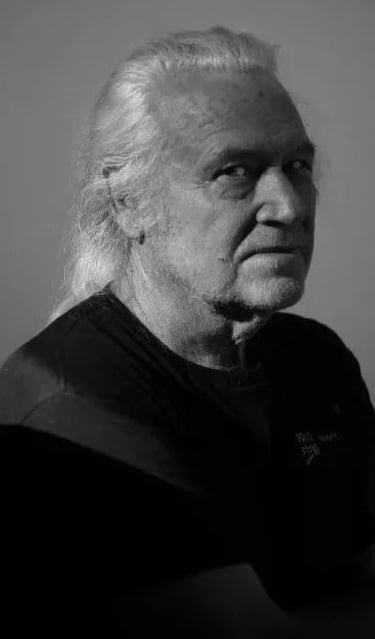
Gary Hill (Santa Mónica, California, 1951) es una figura central en el arte electrónico y el video experimental. Su obra transita desde la escultura metálica de finales de los años 60 hasta complejas instalaciones audiovisuales que exploran la materialidad del lenguaje, la percepción sensorial y la interacción del espectador.
Su práctica interdisciplinaria abarca video, sonido, performance y escultura, y se caracteriza por una profunda reflexión sobre la ontología del lenguaje y la experiencia perceptiva.
Entre sus obras destacadas se encuentran Electronic Linguistic (1977), Incidence of Catastrophe (1987–88) y Tall Ships (1992), que ejemplifican su interés por la intersección entre texto, imagen y sonido, creando experiencias inmersivas que cuestionan la naturaleza misma de la comunicación y la percepción.
La influencia de Hill en el arte contemporáneo se ha visto reflejada en numerosas exposiciones individuales en instituciones de renombre internacional, como el Centre Pompidou en París, el Museo Guggenheim y el MOMA en Nueva York y el Museu d’Art Contemporani en Barcelona. Su obra ha sido reconocida con prestigiosos premios, entre ellos el León de Oro en la Bienal de Venecia (1995) y una MacArthur Fellowship (1998), consolidando su posición como una de las voces más innovadoras en el arte de los nuevos medios.
Gary Hill (Santa Monica, California, 1951) is internationally recognized as one of the most groundbreaking pioneers in electronic and new media art. From his early metal sculptures in the late 1960s to the sophisticated audiovisual installations that would define his mature practice, Hill has consistently pushed the boundaries of perception, language, and the viewer’s role in the experience of art.
His work traverses video, sound, performance, text, and sculpture, often blurring the limits between these media to generate poetic, philosophical, and immersive spaces.
Signature works such as Electronic Linguistic (1977), Incidence of Catastrophe (1987–88), and Tall Ships (1992) reveal Hill’s longstanding exploration of the dynamic interplay between image, sound, and meaning. In these and other installations, language is not simply a tool but a living entity—spoken, fractured, embodied—calling attention to the fragile relationship between cognition and sensory experience.
Hill’s work has been the subject of major solo exhibitions at prestigious institutions including the Centre Pompidou (Paris), the Guggenheim Museum (New York), and the Museu d’Art Contemporani de Barcelona. His artistic excellence has been recognized with numerous awards, notably the Golden Lion at the Venice Biennale (1995) and a MacArthur “Genius” Fellowship (1998).
Hill’s practice not only represents a cornerstone of media art history but also a continuously relevant and evolving contribution to conceptual discourse, one that challenges, engages, and transforms the viewer.
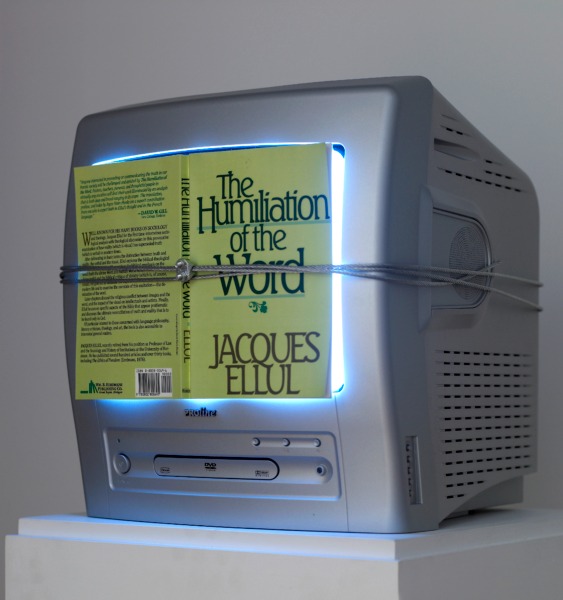
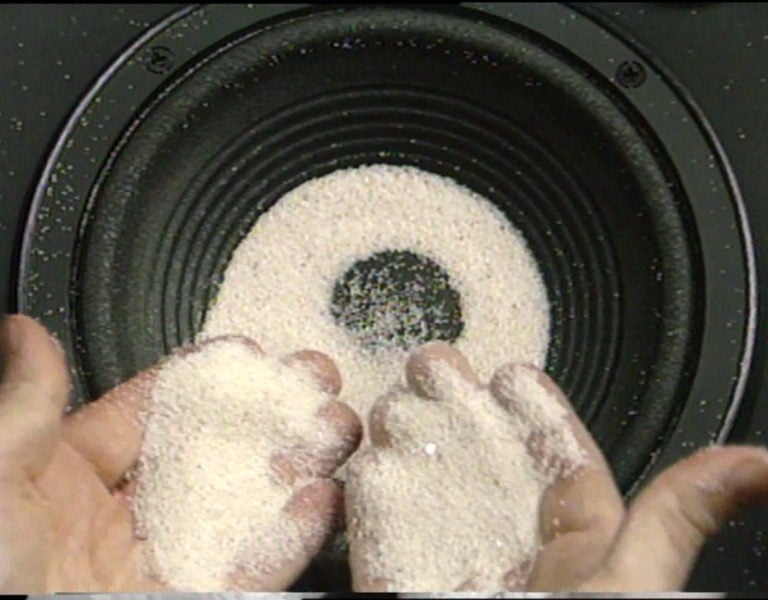
Gary Hill, “Bind”, 1995. Single-channel video / sound installation
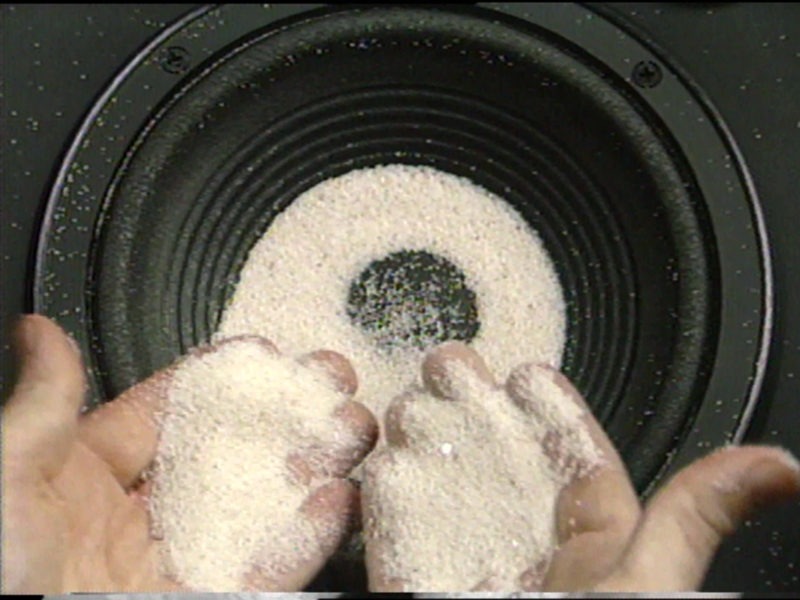
Mediations (towards a remake of Soundings), 1979/1986
Video (color, stereo sound); 4:17 min.
Born on March 11, 1923, in Zépréguhé, Ivory Coast, experienced a mystical revelation on March 11, 1948, which radically altered the course of his life. Following this epiphany, he dedicated himself entirely to art, adopting the name Cheik Nadro, “the Revealer.” He passed away on January 28, 2014, leaving behind a singular legacy as a self-taught artist whose creative expression extended beyond the visual to encompass poetry, philosophy, and essay writing
His philosophical reflections, rooted in African reality and the quest for the meaning of life, led him to produce an expansive series of small-scale drawings—postcard-sized works rendered in ballpoint pen and colored pencil. This series, titled Connaissance du Monde (Knowledge of the World), forms a kind of visual encyclopedia of universal knowledge and human experience.
Bouabré was also the creator of the Bété Alphabet, a unique writing system composed of 448 monosyllabic pictograms developed for his ethnic group, the Bété people, with the noble aim of bridging African and European cultures.
He viewed his art as a total expression of both the visible and the invisible, embracing in it a redemptive mission: to preserve, illuminate, and transmit the ancestral knowledge of his people—and of the world.
Bouabré’s legacy includes the distinction of becoming the second Black African artist to be honored with a solo exhibition at The Museum of Modern Art in New York City (MoMA). His work has been presented in some of the world’s most esteemed cultural institutions, including the Centre Pompidou in Paris, the 55th Venice Biennale, and the Guggenheim Museum in Bilbao, Spain. His international stature rose significantly following his inclusion in the landmark 1989 exhibition Magiciens de la Terre at the Centre Pompidou—an event widely regarded as a turning point in the global visibility of contemporary African artists.
The exhibition brings together several of Bouabré’s seminal series, among them the Bété Alphabet—a visionary writing system of pictographic characters; the Museum of African Faces—a poetic investigation into scarification and corporeal identity; and selections from his monumental cycle Knowledge of the World. Each work testifies to Bouabré’s unwavering devotion to the preservation of cultural memory and his expansive vision of knowledge as a collective, borderless inheritance.
当然,这里是你的西班牙文内容的中文翻译,正式且流畅:
弗雷德里克·布鲁利·布阿布雷(Frédéric Bruly Bouabré)于1923年3月11日出生在科特迪瓦的泽普雷古埃(Zépréguhé),1948年3月11日经历了一次神秘的启示,彻底改变了他的人生轨迹。自此,他将一生奉献于艺术,取名为“谢克·纳德罗”(Cheik Nadro),意为“启示者”。他于2014年1月28日去世,作为一位自学成才的艺术家,留下了独特的艺术遗产,其创作不仅超越视觉艺术,还涵盖诗歌、哲学和散文。
他的哲学思想聚焦于非洲现实和生命的终极意义,促使他创作了一系列小幅绘画——如明信片大小——使用圆珠笔和彩色铅笔完成。该系列名为《世界的认知》(Connaissance du Monde),堪称一部视觉百科全书,涵盖普遍知识和人类经验。
布阿布雷还是贝泰字母(Alfabeto Bété)的创始人,这是一套由448个单音节象形符号组成的独特书写系统,旨在为他的民族贝泰人打造,具有连接非洲与欧洲文化的崇高使命。
他视自己的作品为可见与不可见事物的全面展现,肩负着拯救的使命:保护、启迪并传承其民族及全人类的古老智慧。
布阿布雷的艺术遗产中,最为人称道的是他成为第二位在纽约现代艺术博物馆(MoMA)举办个展的非洲黑人艺术家。他的作品曾在全球最具声望的文化机构展出,包括巴黎蓬皮杜中心、第55届威尼斯双年展以及西班牙毕尔巴鄂古根海姆博物馆。他在1989年参加标志性的“地球魔法师”(Magiciens de la Terre)展览后,国际地位显著提升,该展在蓬皮杜中心举办,被视为非洲当代艺术全球可见性的转折点。
此次展览汇集了布阿布雷多部开创性系列作品,其中包括贝泰字母——一套具有远见卓识的象形书写系统;“非洲面孔博物馆”——对疤痕纹身及身体身份的诗意探索;以及其宏大系列《世界的认知》的精选作品。每件作品都见证了布阿布雷对文化记忆保存的坚定信念,以及他将知识视为无界集体财富的广阔视野。
本展览由404艺术收藏协办。
...
Frédéric Bruly Bouabré, nacido el 11 de marzo de 1923 en Zépréguhé, Costa de Marfil, vivió una revelación mística el 11 de marzo de 1948 que transformaría radicalmente el rumbo de su existencia ..+
.
Frédéric Bruly Bouabré, born on March 11, 1923, in Zépréguhé, Ivory Coast, experienced a mystical revelation on March 11, 1948, which radically altered the course of his life ..+
Reload is a visual artist and performer whose extensive international career challenges the linear chronologies of art, proposing an aesthetic where past and future converge with poetic and visual strength.
His work focuses on hand-carved marble, a material with which he establishes a profound relationship, enriched by his own visual language known as retrofuturist art: a fusion of the traditional sculptural canon with contemporary codes drawn from popular culture, cinema, rock music, and personalized universes.
Far from a purely formalist approach, Reload offers an intelligent and humor-laden reinterpretation of classical iconographies, demystifying the great myths of Western art and placing them within the flow of popular culture. This critical operation, sustained by a visual poetics as precise as it is magnetic, transcends traditional sculpture to create an expanded aesthetic experience that invites emotion, reflection, and play.
The power of Reload’s imagery lies in the hybridization of the eternal and the ephemeral, the highbrow and the popular, the canonical and the countercultural. Each work is a multifaceted piece, a trigger for multiple meanings where beauty coexists with provocation, and where history is rewritten from a critical and contemporary subjectivity. Materialized in noble marbles, these pieces merge sculptural tradition with elements of pop culture, generating a renewed dialogue that revitalizes artistic imagination from a fresh and vibrant perspective.
His work has been exhibited in museums, foundations, international art fairs, and public spaces across Europe, Asia, and Russia, and is part of major institutional and private collections.
Reload has consolidated his position with impactful solo exhibitions, including those at the Archena Museum, as well as participation in international art fairs such as SWAB Barcelona, Art Madrid, Estampa or Art Taipei.
LAVIO Art Gallery
Murcia - Shanghai
Contact:
(+0034) 628990629
lavioartgallery@gmail.com